Office 3S28 · ENS Paris-Saclay · Gif-sur-Yvette, France
About me
I am a 3rd year PhD Student in Applied Mathematics at Centre Borelli (ENS Paris-Saclay) under supervision of Nicolas Vayatis. I am working in collaboration with Framatome, a world leader in civil nuclear industry.
Before starting my PhD, I graduated from the MVA Master’s program at ENS Paris-Saclay, the Master’s in Mathematics of Modeling at Sorbonne Université, and earned a Civil Engineering degree from Mines Nancy.
My work focuses on the control of complex dynamical systems under real-world constraints, combining machine learning and model-based approaches to improve both computational efficiency and robustness. During my PhD, I develop ML for control of industrial dynamical systems, from surrogate dynamics models to imitation learning of control policies, and integrate these methods into nonlinear MPC pipelines with formal safety guarantees. My work bridges surrogate dynamics learning, differential algebraic equations, and optimal control — with a focus on sample efficiency and stability.
Imitation Learning
Dynamical Systems
Machine Learning
Model Predictive Control
All my publications are listed here and on my Google Scholar. For any request, feel free to contact me by email.
Recent works
PaperSep 2026
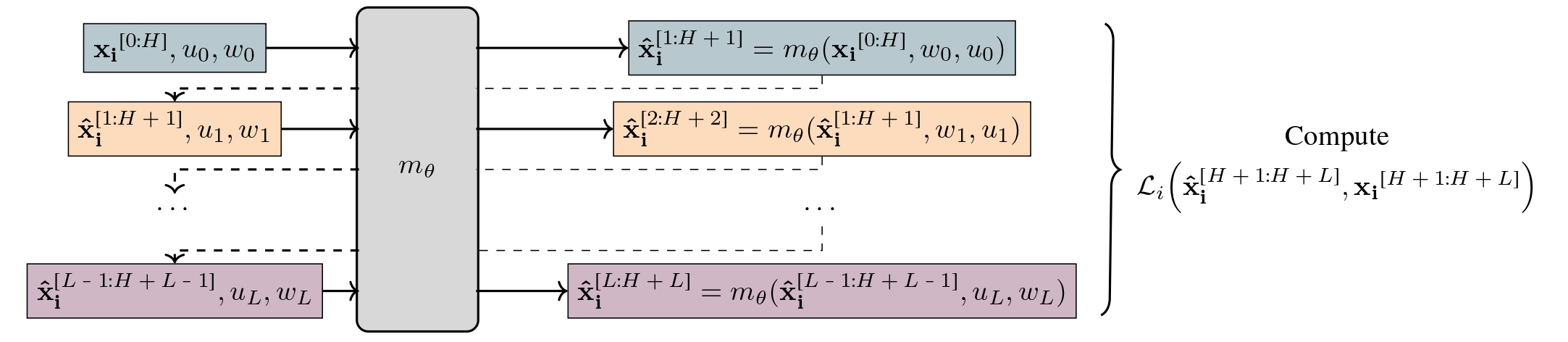
Structured Representation Learning for Behavior Cloning: How can we learn to safely control a nuclear power plant?
Structuring the latent space by timescale makes behavior cloning of an NMPC expert for nuclear load-following more accurate and more often feasible — and, used to warm-start the NMPC, it recovers full feasibility while cutting computation time by 15%.
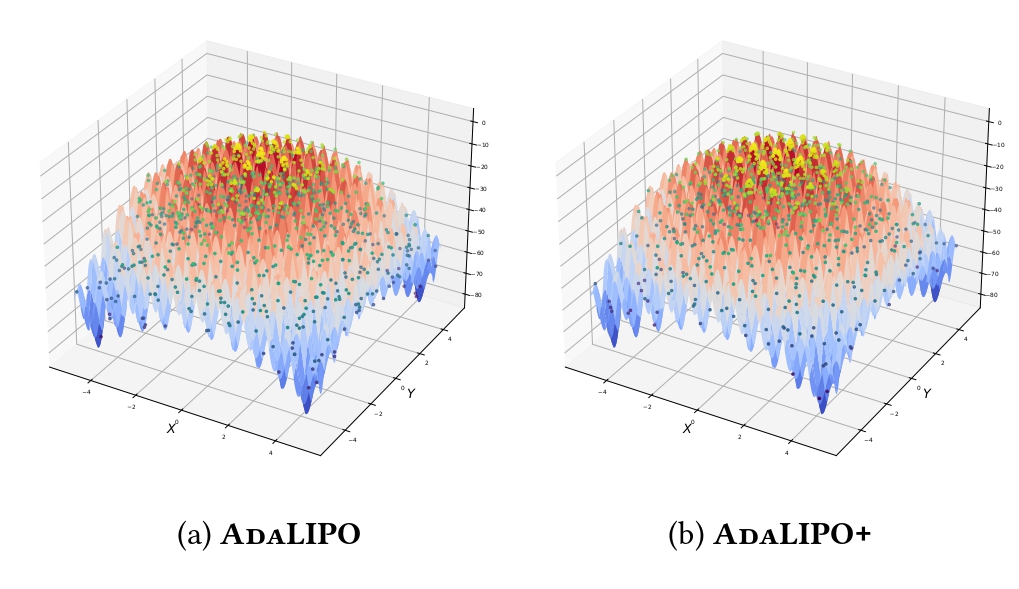
Designing practical improvements on a global optimization algorithm
This paper develops two major improvements on the global optimization method LIPO from Malherbe & Vayatis, 2017: an empirical stopping criterion and a decaying exploration rate.